
Ditch the Debt with These Proven Management Strategies
The Best Way to Manage Credit Card Debt (And Why It Matters Right Now)
The best way to manage credit card debt combines a structured repayment strategy with smarter spending habits. Here are the most effective steps:
- List all your debts — balances, interest rates, and minimum payments
- Choose a payoff method — debt avalanche (highest interest first) or debt snowball (smallest balance first)
- Pay more than the minimum — every extra dollar cuts your interest costs significantly
- Consider a balance transfer — move debt to a 0% APR card to freeze interest temporarily
- Consolidate with a personal loan — personal loan rates average 12.33% vs. 21.76% for credit cards
- Build a budget — use the 50/30/20 rule to free up money for debt repayment
- Contact your creditors — ask for lower rates or a hardship payment plan
- Seek free credit counseling — non-profit agencies can help create a debt management plan
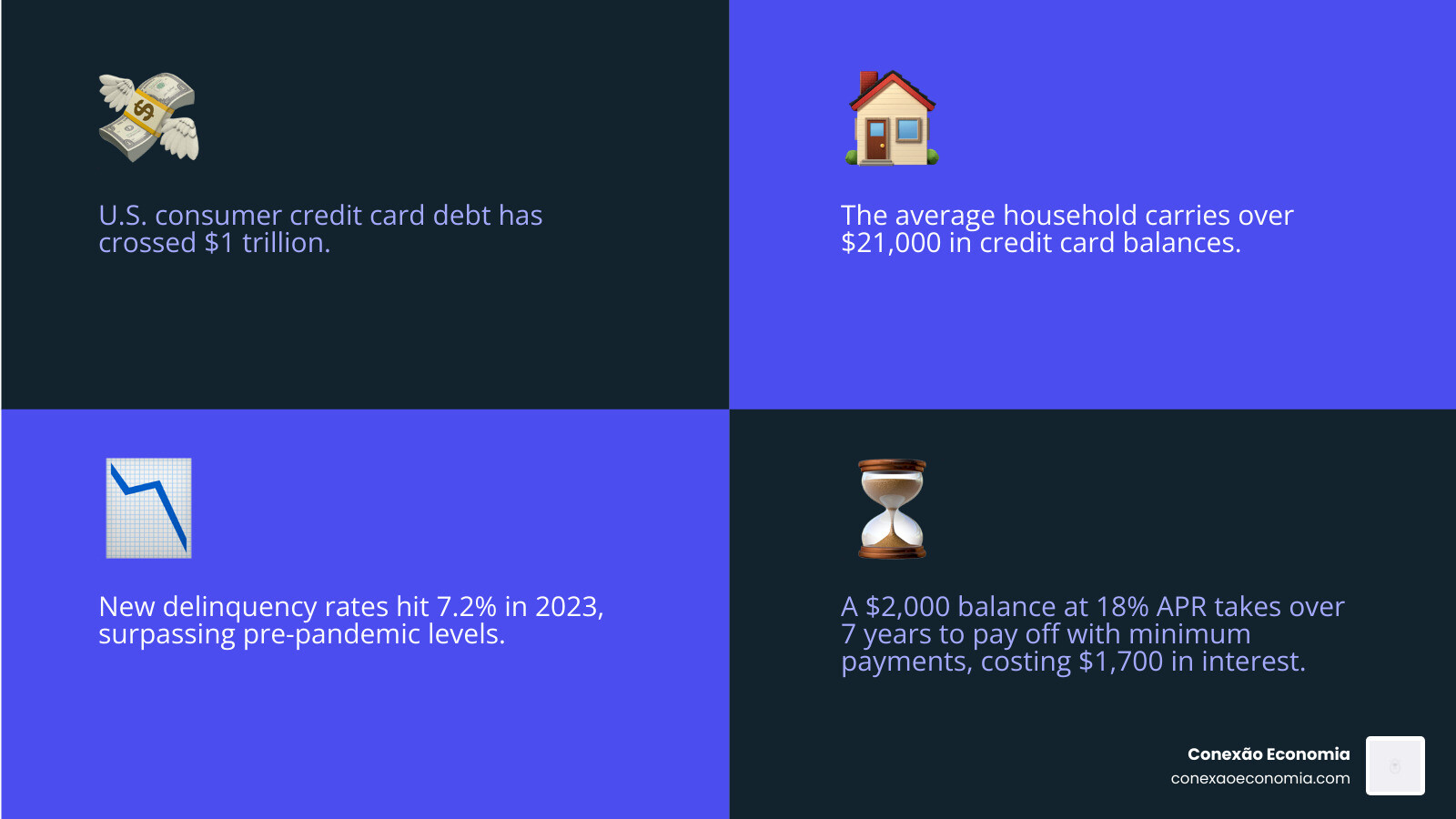
U.S. consumer credit card debt has crossed $1 trillion, according to Federal Reserve data. The average household carries over $21,000 in credit card balances. And in 2023, new delinquency rates hit 7.2% — surpassing pre-pandemic levels.
If you feel like you’re running on a treadmill with your credit card bill, you’re not imagining it. Credit card interest compounds daily. That means even when you make payments, interest quietly piles up in the background.
Consider this: a $2,000 balance at 18% APR, paid with minimum payments only, takes over 7 years to clear — and costs around $1,700 in interest alone. That’s nearly double what you originally spent.
The good news? There is a way out. It doesn’t require a miracle or a windfall. It requires a clear plan, the right tools, and consistent action — all of which we’ll walk you through in this guide.
Understanding the Best Way to Manage Credit Card Debt
To conquer your debt, we first need to look at the “why” behind the numbers. Credit card debt is unique because it is revolving debt. Unlike a car loan where the balance only goes down, a credit card allows you to borrow, pay back, and borrow again. This flexibility is a double-edged sword.
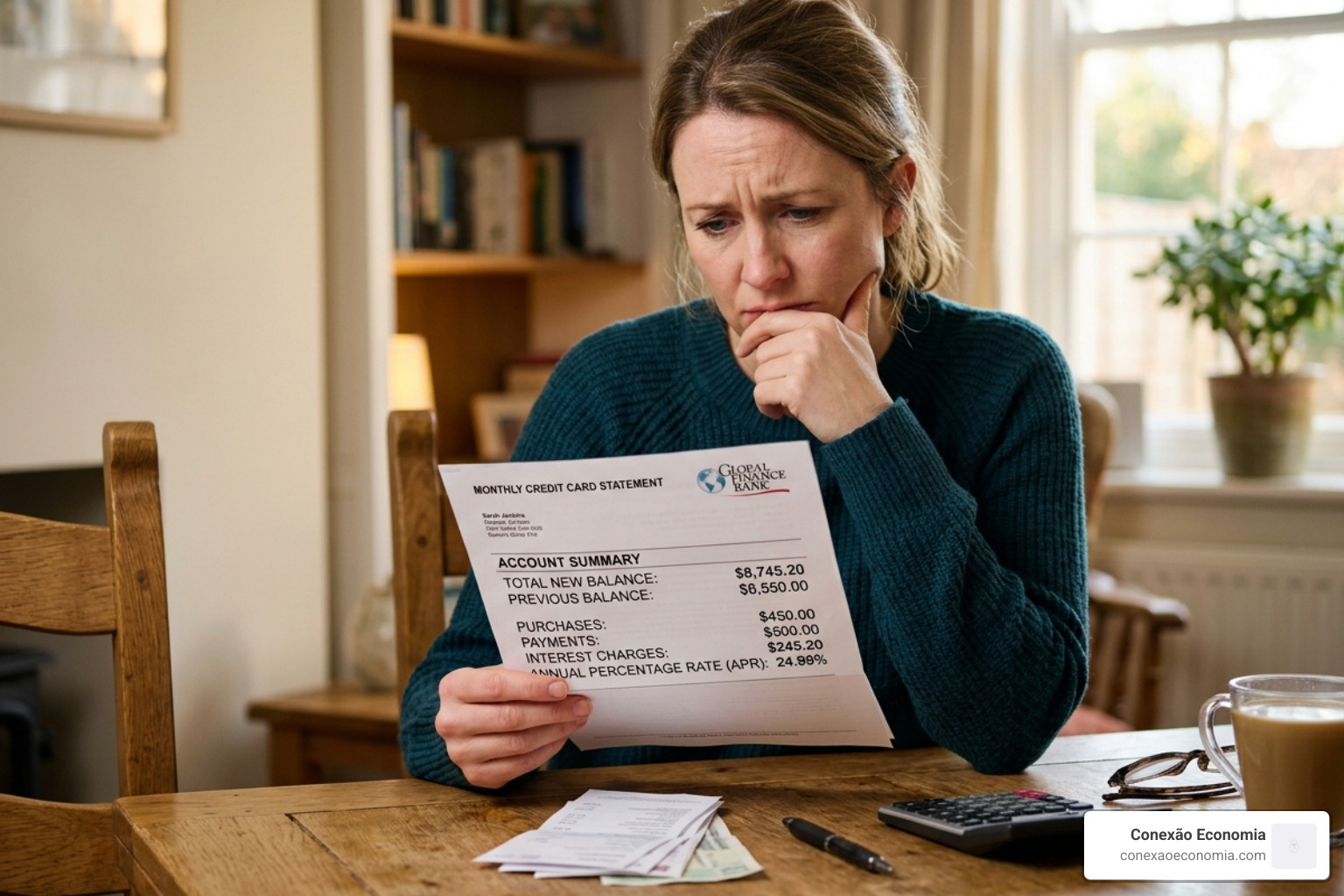
The real “villain” in this story is daily compounding interest. Most credit cards calculate interest based on your average daily balance. Every day you carry a balance, a small amount of interest is added to your total. The next day, you are charged interest on the original balance plus yesterday’s interest. This creates a snowball effect that works against you.
Many people fall into the minimum payment trap. Credit card companies only require you to pay a tiny fraction of your balance—usually 1% to 3%. If you only pay this amount, the vast majority of your money goes toward interest, leaving the principal balance virtually untouched.
As of April 2026, with interest rates remaining a significant factor in the global economy, staying informed is the first step toward financial literacy. At Conexão Economia, we believe that understanding these mechanics is essential. Look at the table below to see the staggering difference between just “getting by” and taking control.
| Debt Amount | APR | Payment Strategy | Time to Pay Off | Total Interest Paid |
|---|---|---|---|---|
| $5,000 | 21% | Minimum Only | 18+ Years | $7,400+ |
| $5,000 | 21% | $250 Fixed Monthly | 2 Years | $1,150 |
By simply switching from a minimum payment to a fixed monthly installment, you could save over $6,000 and 16 years of your life!
Top Strategies for Rapid Debt Repayment
Once we’ve stopped the bleeding by understanding interest, we need an aggressive strategy. There are two “heavyweight” champions in debt repayment: the Debt Snowball and the Debt Avalanche.
The Debt Snowball: For the Motivation Seekers
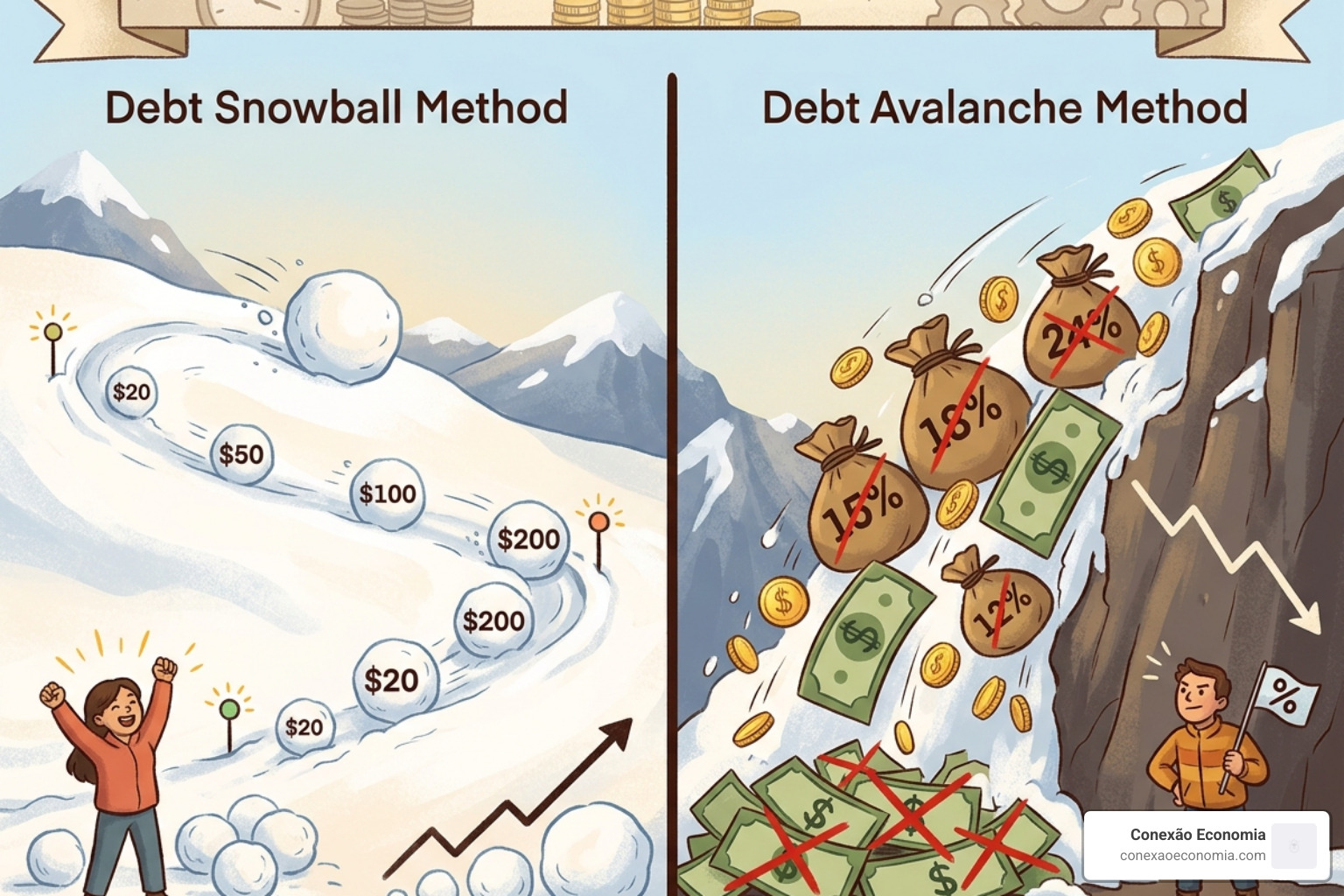
The Debt Snowball method focuses on psychology. You list your debts from the smallest balance to the largest, regardless of interest rate. You pay the minimum on everything except the smallest debt, which you attack with every extra cent you have.
- Why it works: When that $300 card is gone in two months, you feel a massive win. That dopamine hit gives you the “oomph” to tackle the next one.
- The “Roll”: Once the smallest debt is paid, you take that entire payment and add it to the minimum of the next smallest debt.
The Debt Avalanche: For the Math Lovers
The Debt Avalanche prioritizes interest rates. You list your debts from the highest APR to the lowest. You attack the card with the 29% interest rate first, even if it has a $10,000 balance.
- Why it works: Mathematically, this is the best way to manage credit card debt if you want to pay the least amount of interest possible.
- Efficiency: You finish your debt journey faster and with more money in your pocket.
Regardless of the method, automation is your best friend. Set up automatic payments for at least the minimums so you never hit a late fee, which can stay on your credit report for up to seven years. Additionally, look for “found money.” Around 36% of Americans have a side hustle, and 20% of them use that extra income specifically to pay down debt. Whether it’s selling unused electronics or picking up a weekend gig, every extra dollar is a nail in the coffin of your debt.
Choosing the Best Way to Manage Credit Card Debt for Your Personality
We are all wired differently. Some of us need the “quick win” of the snowball method to stay engaged. If you are someone who starts a workout plan and quits after a week because you don’t see results, the Snowball is for you. Scientific research on debt repayment suggests that the sense of progress from eliminating an entire account is often more powerful than the mathematical savings of the avalanche.
However, if you are analytical and get frustrated knowing you’re “wasting” money on high interest, the Avalanche will keep you sane. The key is self-grace. You might have a month where the car breaks down and you can’t pay extra. That’s okay. Don’t let one bad month spiral into giving up entirely.
Implementing the Best Way to Manage Credit Card Debt Through Budgeting
You cannot out-earn a bad spending habit forever. A budget is simply a roadmap for your money. We recommend the 50/30/20 rule:
- 50% for Needs (Rent, groceries, utilities)
- 30% for Wants (Streaming services, dining out)
- 20% for Savings and Debt Repayment
When you are in high-interest debt, you might need to temporarily flip the “Wants” and “Debt” categories. Track your expenses for 30 days. You might be surprised to find that those $5 coffee runs or unused streaming subscriptions add up to $200 a month—money that could be killing your debt.
One of the most effective cost-cutting tactics is the “Cash-Only” diet. An MIT study found that people spend up to 64% more when using a credit card compared to cash. The physical act of handing over a $20 bill hurts the brain more than swiping a piece of plastic. If you’re struggling to control spending, leave the cards at home and use cash for your “Wants.”
Leveraging Financial Tools: Consolidation and Transfers
Sometimes, your interest rate is so high that you feel like you’re drowning. In these cases, we can use financial tools to lower the “temperature” of your debt.
Using Balance Transfers as the Best Way to Manage Credit Card Debt
A balance transfer involves moving your high-interest debt to a new card with a 0% introductory APR. These offers usually last 12 to 21 months.
- The Pros: Every penny you pay goes toward the principal. It’s like freezing time.
- The Cons: Most cards charge a 3% to 5% transfer fee. If you transfer $5,000, you might pay a $250 fee upfront.
- The Risk: If you don’t pay off the balance before the promo ends, the interest rate jumps back up (often to 25% or higher). Also, opening a new card can temporarily dip your credit score due to the hard inquiry.
Debt Consolidation Loans
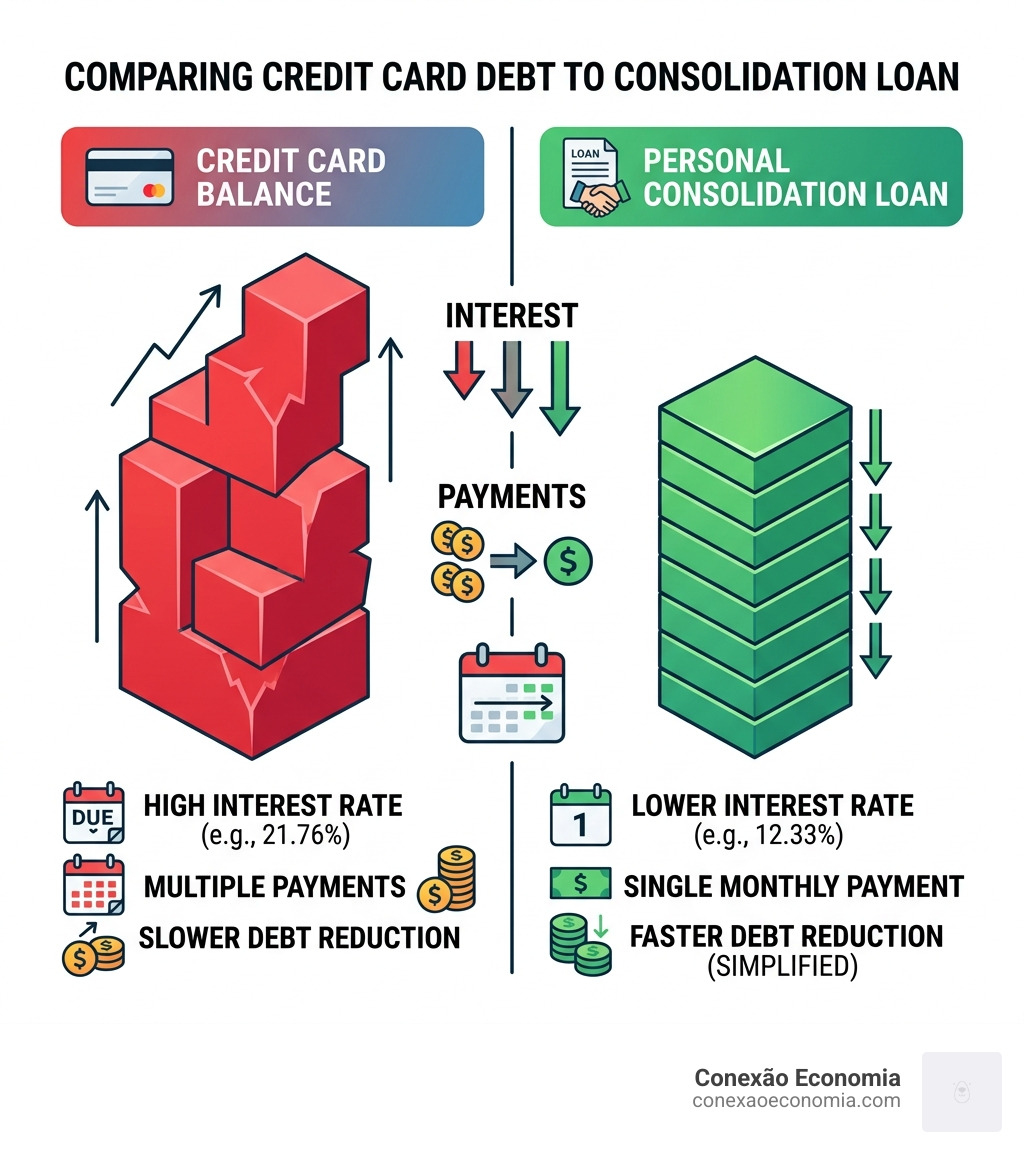
Another option is a personal loan. On average, 24-month personal loans have an interest rate of 12.33%, which is nearly half the average credit card rate of 21.76%.
- Simplification: Instead of five credit card bills, you have one monthly installment.
- Credit Boost: Moving revolving debt (credit cards) to installment debt (a loan) can actually improve your credit score by lowering your credit utilization ratio.
Professional Help vs. Risky Debt Relief
When debt becomes overwhelming—perhaps exceeding 50% of your annual income—it might be time to look for professional help. But be careful: not all “help” is created equal.
Credit Counseling: The Safe Route
Non-profit credit counseling agencies, such as those accredited by the National Foundation for Credit Counseling (NFCC), are the gold standard. They can help you set up a Debt Management Plan (DMP). In a DMP, the counselor negotiates with your creditors to lower your interest rates and waive fees. You make one monthly payment to the agency, and they distribute it to your creditors. These plans typically take 3 to 5 years.
Debt Settlement: The Risky Route
Debt settlement companies often tell you to stop paying your bills so they can negotiate a lump-sum settlement for less than you owe.
- The Danger: This trashes your credit score, leads to massive late fees, and can even result in lawsuits from your creditors.
- The Cost: They charge high fees, and the “forgiven” debt may be considered taxable income by the IRS.
- Our Advice: Avoid these companies. You can often negotiate directly with your bank’s “hardship department” for free.
Extreme Measures: Bankruptcy
Bankruptcy is a last resort. While it can wipe the slate clean, a Chapter 7 bankruptcy stays on your credit report for 10 years, making it difficult to buy a home or even get certain jobs. Always consult with a legal professional before taking this path.
Building Long-Term Habits for Financial Health
Paying off the debt is only half the battle. The other half is ensuring it never comes back. This requires a shift in how you view credit.
- The 30% Rule: Your credit utilization ratio (how much of your limit you’re using) accounts for 30% of your FICO score. To keep your score healthy, never use more than 30% of your available limit. If your limit is $1,000, keep the balance under $300.
- On-Time Payments: This is the single biggest factor (35%) in your credit score. Even if you can only pay the minimum, pay it on time.
- The Emergency Fund: Most people fall into credit card debt because of an unexpected expense—a flat tire, a medical bill, or a broken water heater. Aim to save $1,000 as a starter emergency fund before you start aggressively paying down debt. Eventually, you want 3 to 6 months of expenses.
- Monitor Your Progress: Use free tools or apps to check your credit report regularly. You are entitled to a free report from each of the three major bureaus.
Frequently Asked Questions about Credit Card Debt
How long does it take to pay off $2,000 with minimum payments?
If your interest rate is 18%, it will take over 7 years. During that time, you’ll pay roughly $1,700 in interest. This is why the best way to manage credit card debt is to always pay more than the minimum. Even an extra $20 a month can shave years off that timeline.
Will closing a credit card hurt my credit score?
Usually, yes. Closing a card reduces your total available credit, which spikes your utilization ratio. It also shortens your “average age of accounts.” Unless the card has a high annual fee or you truly cannot stop yourself from spending on it, it’s better to pay it off, cut it up, and leave the account open with a zero balance.
Can I negotiate my interest rate directly with the bank?
Yes! It’s one of the best-kept secrets in finance. Call the number on the back of your card and say, “I’ve been a loyal customer, but my current APR is very high. I’m looking at other cards with lower rates. Is there anything you can do to lower my APR today?” If you’ve made on-time payments, they will often lower it by 2-5% just for asking.
Conclusion
Managing credit card debt isn’t about being perfect; it’s about being persistent. Whether you choose the psychological wins of the Debt Snowball or the mathematical savings of the Debt Avalanche, the most important step is the one you take today.
The $1 trillion in national debt is made up of individuals just like you. By creating a budget, leveraging tools like balance transfers, and building an emergency fund, you are not just “paying bills”—you are buying back your future freedom.
We at Conexão Economia are dedicated to providing you with the literacy needed to navigate these waters. Debt doesn’t have to be a life sentence. With a plan in hand, you can ditch the debt and start building the life you actually want to live.
For more resources on budgeting, investing, and smarter financial decisions, explore our financial education services.
